
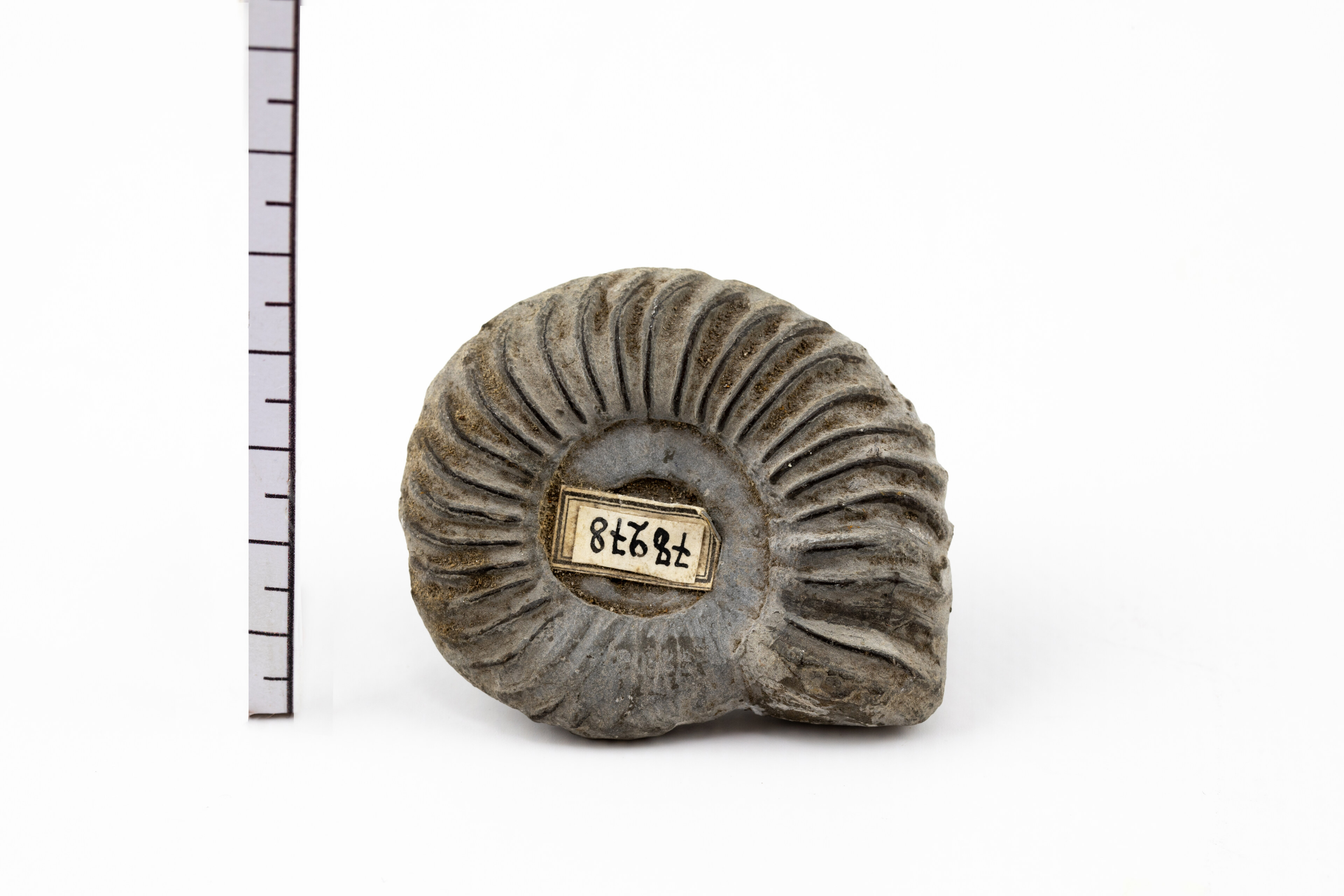
Ammonite. Fossil Cephalopod Mollusc
The object is a fossilised remains of an extinct marine cephalopod mollusc belonging to the subclass Ammonoidea. Representatives of this group inhabited the world’s oceans throughout the Palaeozoic and Mesozoic eras. The specimen is a mineralised shell with a tightly coiled spiral form, consisting of numerous chambers separated by septa. The surface of the shell may be ornamented with ribs.
A characteristic feature of ammonites is the planispiral structure of their shells. The internal chambers were filled with gas and enabled the animal to regulate its buoyancy. The living animal occupied only the final and largest chamber. The complex pattern of the septal sutures preserved on the fossil shell is an important diagnostic feature used to identify individual species and taxonomic groups.
Ammonites were active marine predators and played an important role in ancient marine ecosystems. They became particularly widespread during the Jurassic and Cretaceous periods and became completely extinct at the end of the Cretaceous during the global biotic crisis approximately 66 million years ago. Owing to their rapid evolution and wide geographic distribution, ammonites are among the most important index fossils used to determine the age of geological strata.
Provenance: From the museum collection, acquired before the Second World War.
Passport of exhibit
- Inventory marks: ПКМВК 631 П 403/144
- Material: Fossilised Mollusc
- Dating: From 400 till 66 millions years ago
- Size: 4 х 5 сm