
Box Tile
Ukraine.
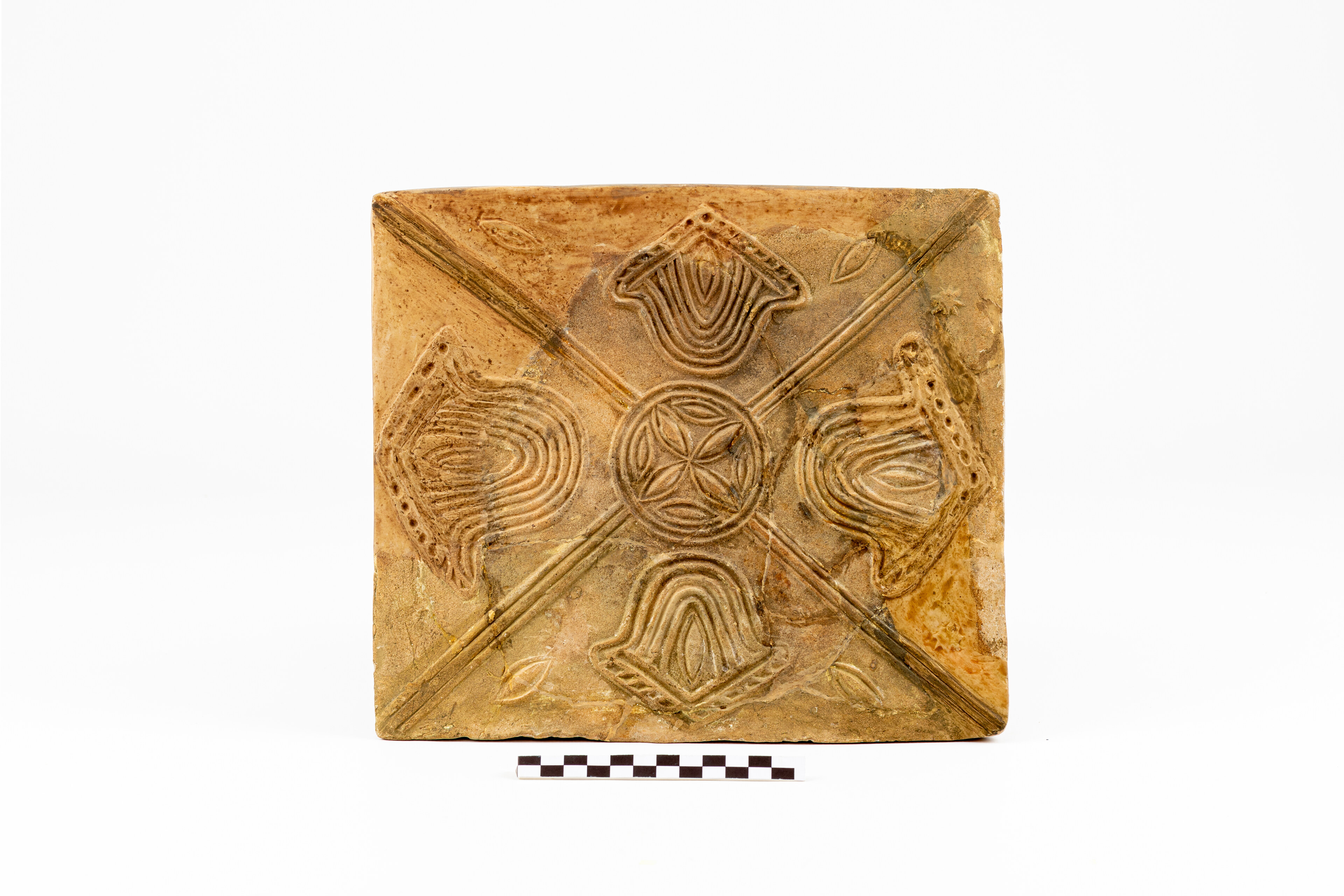
The tile is rectangular in shape, with a high back chamber and a slightly outward-flaring rim. Its natural terracotta surface is preserved, with no traces of glaze.
The front plate is decorated with a relief stamped geometric and vegetal ornament arranged in the form of a diagonal cross formed by two “stems”. Between them are stylized massive buds accompanied by individual petals and stars. The centre of the composition is occupied by a raised four-petalled rosette enclosed within a double circle. Horizontal petals are placed between the petals of the rosette.
Tiles of this type were a widespread element of the interiors of Ukrainian homes during the early modern period, combining utilitarian and decorative functions. The tile was made by moulding in a wooden or clay mould, followed by manual finishing of the ornamental details. It is made of well-levigated light-coloured clay and was fired in a pottery kiln. The natural terracotta surface has no traces of glaze, a feature characteristic of a significant proportion of stove tiles from Left-Bank Ukraine in the 18th century.
The object is valuable evidence of the development of stove-tile production and the decorative and applied arts of the early modern period. The ornamented tile reflects the high level of craftsmanship and artistic preferences of the population of the Hetmanate.
Provenance: The object was discovered during archaeological rescue excavations conducted by the Poltava Archaeological Expedition of the Rescue Archaeological Service Research Centre of the Institute of Archaeology of the National Academy of Sciences of Ukraine at the Nastasivka II site near Nastasivka Village, Khorol District, Poltava Region, in 2017.
Passport of exhibit
- Inventory marks: ПКМВК 93662 А 14677
- Author (manufacturer): Unknown master
- Material: Clay
- Technique: Forming, baking
- Dating: Second half of the 18th – first half of the 19th century.
- Size: 22,7 х 13,2 х 7 сm